
03 · UI/UX & product design · GCC & MENA
UI/UX design and product design, from wireframe to finished pixel
Nexlla is a UI/UX and product design team working with companies in the UAE, the wider GCC, Syria and the MENA region. We study how people use a product, shape it into wireframes and prototypes, and deliver tested interfaces with a design system engineers can build from directly. Because the same team writes the production code, every screen arrives ready to ship.
Drag the handle across the screen, or focus it and use the arrow keys. The left side is the grey wireframe where decisions are made; the right side is the finished interface they become.
Scope
What a UI/UX and product design engagement covers
Good interface design is mostly invisible work done before anything looks polished. These are the six layers we plan for; a small project may need two of them, a new platform needs all six.
- 01
Research and audit
Interviews, analytics and a walk through the current product to find where people hesitate, abandon or ask support for help.
- 02
Structure and flows
Information architecture, navigation and the step-by-step journeys for each task, written down before any screen is drawn.
- 03
Wireframes and prototypes
Grey, fast and disposable. We test the order of decisions with a clickable prototype while changes still cost minutes, not sprints.
- 04
Interface design
Type, colour, spacing, iconography and motion, applied to every state a screen can be in: empty, loading, error, success and full.
- 05
Design system
Tokens and components with documented behaviour, so new screens are assembled from parts instead of redrawn from scratch.
- 06
Handoff in code terms
Specs named the way engineers name things, reviewed by the engineers who will build them. On our own builds, the handoff is a conversation across one desk.
Design system specimen
A design system you can touch, in both directions
This panel is built from real CSS, not a picture: the same tokens drive every swatch, size and component below. Flip it to Arabic and the layout mirrors, the type switches to IBM Plex Sans Arabic and the copy is rewritten, not machine-swapped. That is how we hand over a system: tokens, components, states and both reading directions.
Colour
- Amber 500
#F59E0B - Graphite 950
#0E0D0B - Paper 50
#FAF7F2 - Success
#34D399 - Danger
#F87171
Type scale
40/44Book your table
24/30Friday, 8:30 pm
16/24Four guests, terrace seating. We hold the table for 15 minutes.
13/18Free cancellation until 6 pm
Spacing
4816243248
Buttons · states
Input
Toast
Arabic copy in the specimen is written for the interface, not translated word for word. We keep Western digits here because many Gulf apps use them; the numeral style is a decision made per audience.
Process
Two diamonds: first find the right problem, then the right design
We use the double-diamond model because it forces two honest pauses. Each diamond opens up options, then narrows them to one decision you sign off.
1Discover
We talk to the people who use the product and the people who support it, read the analytics and list every assumption out loud.
You get: a findings summary and the journeys that matter most.
2Define
We narrow the findings to a short problem statement, success measures and the flows in scope. Anything left out is written down, not forgotten.
You get: a signed-off brief and a flow map.
3Design
Wireframes first, then a clickable prototype tested with real users, then the finished interface on top of a growing design system.
You get: tested prototypes and final screens for every state.
4Deliver
We hand over the system and stay through the build, reviewing what engineers produce against the design and fixing gaps on the spot.
You get: the design system, specs and a review of the built product.
Plain definitions
UX, UI and product design are three different jobs
- UX design
- How the product works. Which steps a person takes, in what order, with what information in front of them, and what happens when something goes wrong.
- UI design
- How it looks and responds. Layout, type, colour, icons, motion and the visual states of every component, from a resting button to a failed payment.
- Product design
- Both of the above, tied to the business. Deciding what to build first, what to leave out and how the team will know the design is working after launch.
Many teams buy UI and assume UX comes with it. It does not: a beautiful screen that sits in the wrong place in a journey still loses people. We price and plan the three jobs separately so you can see where the effort goes.
Right to left
Designing for Arabic and English at the same time
Products in the Gulf, the Levant and North Africa are read in two directions. Mirroring a finished English design at the end produces broken layouts, so we design both from the first wireframe.
Mirror the layout, not everything
Navigation, progress and back arrows flip. Media controls, charts over time and phone numbers usually do not.
Plan for longer and shorter text
Arabic labels can be noticeably shorter or longer than English ones, so components are sized for both before they are approved.
Pair the typefaces
Latin and Arabic faces are matched for weight and height, such as IBM Plex Sans with IBM Plex Sans Arabic, so mixed screens feel like one product.
Handle mixed content
Brand names, prices and codes inside Arabic sentences need explicit direction rules, or punctuation lands in the wrong place.
Proof
Products we designed, and the ones we use every day
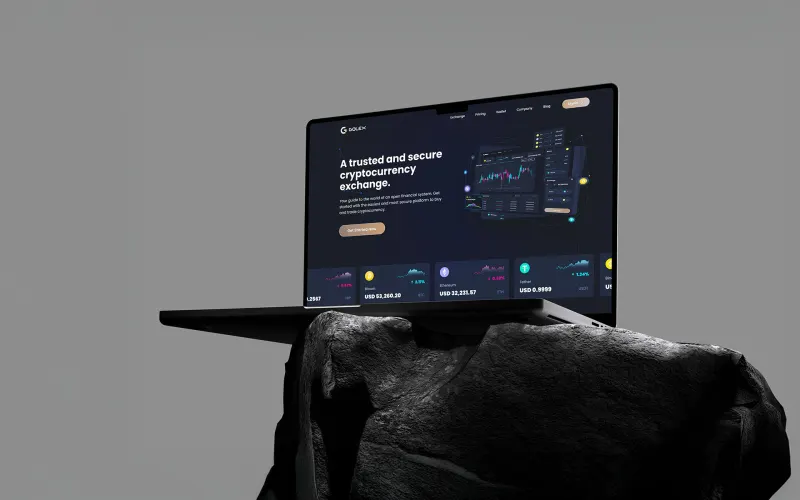 Making irreversible actions feel deliberate
A full UI/UX architecture for a decentralized exchange: wallet connection as a guided handshake, swaps that show what you hold and what you will receive, and a review step that surfaces consequences before a transaction is committed.
Read the Golex case study
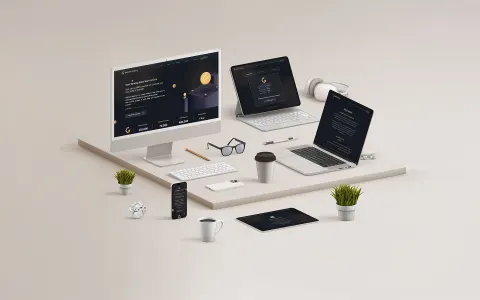
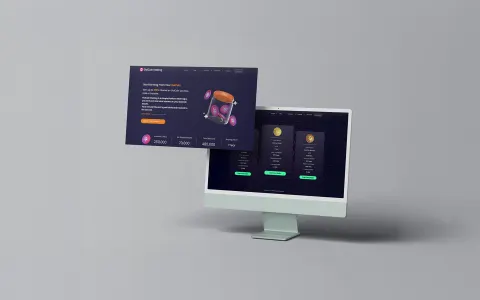 A redesign that did not unsettle existing users
V1 set up the staking product end to end. Two years later V2 rebuilt onboarding, hierarchy and the dashboard around real usage while keeping what users already trusted.
Read the GolStaking case study
Our own products, designed and run by the same team
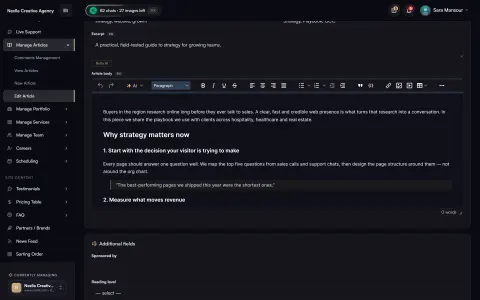 Website Dashboard
Content, analytics, bookings and careers for a whole website behind one login, in 15+ languages.
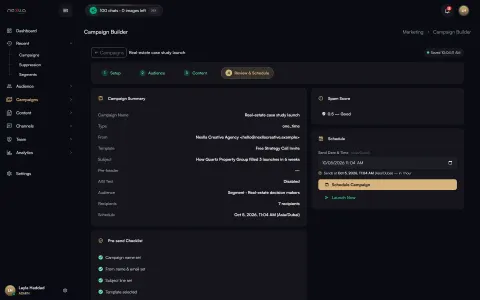 Marketing Suite
A CRM with a deal pipeline, email and WhatsApp campaigns, sequences, forms and a unified inbox.
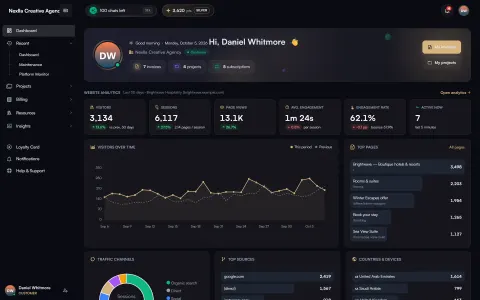 Customer Portal
Projects, approvals, invoices, files and subscriptions for clients, in one secure login.
The three products share one interface system, so a new screen in any of them starts from parts that already exist. We bring the same discipline to client products. Also worth a look: the Dreamoro Book UX revision, where we restructured a marketplace instead of rebuilding it.
From design to build
When the design is approved, the same team builds it
Most of our design work continues into engineering. The first two pages explain how we build for the web and for phones; the other two cover hiring us locally in Dubai.
Ways to work
Three ways to start, all quoted on your scope
UX audit
A review of an existing product with prioritised fixes. A good first step when you know something is wrong but not where.
Design phase
Discover to Deliver for a defined set of flows, ending in a tested prototype and a design system ready for engineering.
Design and build
The design phase followed by development with the same team, so nothing is lost in translation between agencies.
We do not publish prices because two projects with the same screen count can differ a lot in research and states. You receive a written quote with a dated plan. Clients pay Nexlla by Visa, Mastercard, bank transfer, PayPal and other methods. For budgeting, see our guides to app development costs in the UAE and GCC and website costs in the UAE and GCC.
FAQ
Questions about UI/UX and product design
What is the difference between UI design, UX design and product design?
UX design decides how a product works: the flows, the structure and what happens at each step. UI design decides how it looks and feels: layout, type, colour and components. Product design joins both to the business goal, so it also covers priorities, scope and how success is measured.
Do you only design, or do you also build?
Both. The same team designs and engineers, so a design is checked against real code while it is being made. You can also hire us for design only and hand the files and design system to your own developers.
What do we receive at the end of a UI/UX project?
Usually a clickable prototype, the final screens for every state, a design system with tokens and components, written interaction notes, and an export your engineers can use. Everything is yours, including the source files.
Can you design in Arabic and English at the same time?
Yes. We design the right-to-left layout alongside the English one instead of converting it at the end, and we test both with real text. Arabic type is set in IBM Plex Sans Arabic or a face chosen with you.
How long does a product design project take?
It depends on the number of flows and how much research is needed. As a rough guide, a focused redesign of a few key flows often takes a few weeks, while a new platform is designed in phases alongside the build. We give you a dated plan with the quote.
How much does UI/UX design cost?
Every project is quoted on its own scope, so we do not publish fixed prices. The number of user journeys, platforms, languages and research rounds drives the cost. Our cost guides show what moves the number for websites and apps. Read the app cost guide.
Can you improve an existing product without rebuilding it?
Often, yes. We audit the current flows, fix the steps where people stall, and introduce a design system gradually so returning users are not disrupted. GolStaking moved from V1 to a much more mature V2 that way. See the GolStaking case study.
Bring us the wireframe. Or just the problem.
Send a link to your product, a sketch or a paragraph about what users struggle with. We reply with the questions we would ask first and a plan for answering them.
Explore
Other solutions.
Branding & Identity
Strategy, marks, type, voice — built to outlast trends, scale across markets, and travel across languages.
ExploreGraphic Design
Editorial, packaging, campaigns. Print-ready craft from a team that still cares about kerning at 4pt.
ExploreWeb Development
Sites and dashboards built to ship — accessible, fast, observable, and survivable through five years of feature drift.
ExploreMobile Development
iOS, Android, cross-platform. Native where it matters, shared where it makes sense — shipped from one team.
ExploreApplied AI
Production AI, not demos. Multi-provider routing, tool-calling pipelines, persistent memory, auditable per tenant.
ExploreEnd of issue · 2026.05
Time to feel the Nexlla Gen.
Got a big idea? Say hi to unlock creativity and innovation for your seamless project — from the first sketch to the production deploy.