Metaverse · Immersive Commerce
Dubai Metaverse
“Where the virtual world meets real commerce”
Portfolio / Dubai Metaverse
Client
Location
Discipline
Scope
An immersive AR/VR world for Dubai that fuses metaverse interaction with live commerce and physical delivery — letting people explore, shop, gather and meet across virtual and physical space in real time.
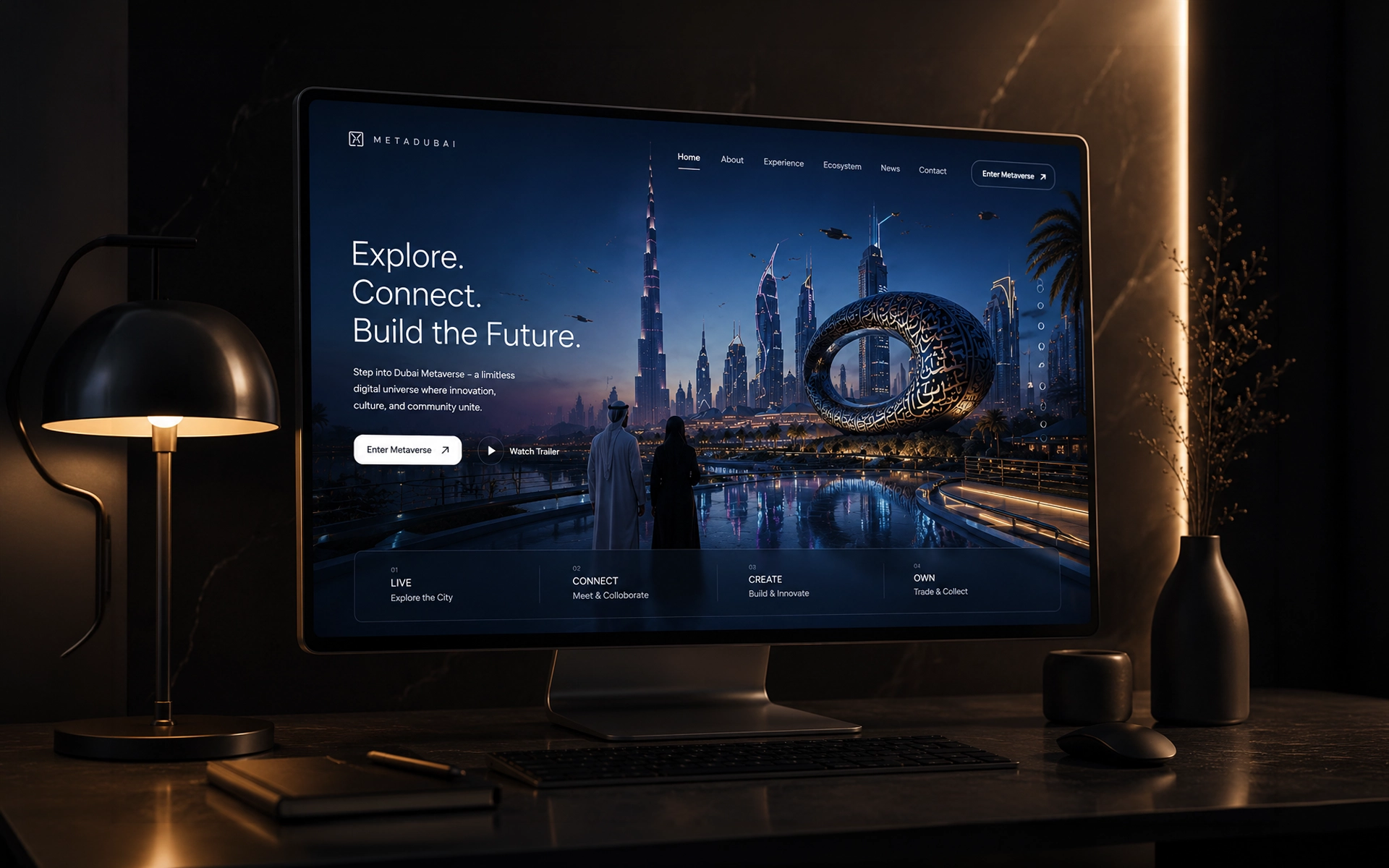
Most digital worlds ask people to choose: live inside the screen, or live outside it. Dubai Metaverse refuses that trade. It is an immersive AR/VR ecosystem built to dissolve the line between virtual presence and physical reality — a place where a moment spent exploring a digital environment can end with a real product arriving at your door, and a meeting held in a virtual room can include people standing in the same physical space.
Overview
We set out to build more than a showcase environment. Dubai Metaverse is a connected ecosystem that links immersive interaction, e-commerce and live social presence into a single continuous experience. Users navigate richly designed spaces, discover both digital and physical products, join interactive environments and participate in meetings — all without ever feeling the seams between worlds.
At its heart sits a simple, ambitious idea: the metaverse should not be an escape from the real economy, but an extension of it. Engagement should be able to become ownership, and ownership should be able to become something you can hold.
The Challenge
Immersive worlds tend to fail in one of two directions. Some are beautiful but inert — spaces you wander through with nothing to do. Others are functional but flat, treating the metaverse as a novelty wrapper around an ordinary online store. Bridging the two demands that several hard problems be solved at once.
We needed to make navigation feel intuitive to people who had never worn a headset, while rewarding those who had. We needed a marketplace that behaved in real time, so that browsing, interacting and purchasing felt like one fluid gesture rather than a chain of disconnected steps. And we needed ownership to be genuine and portable, with the trust that only verifiable, blockchain-backed records can provide. Above all, the system had to carry purchases out of the virtual world and into real-world delivery without breaking the spell.
What We Designed and Built
We delivered the full ecosystem end to end — from immersive AR/VR environments and the underlying world architecture, through the marketplace and its commerce flows, to the web and mobile clients and the blockchain layer that secures ownership.
The real-time marketplace is the connective tissue. Users move through immersive spaces, encounter products in context rather than in a grid, interact with the environments around them, and purchase items virtually — with physical goods routed to real-world delivery and digital assets recorded as verifiable, owned items. Commerce, social presence and exploration share the same surface rather than living in separate tabs.
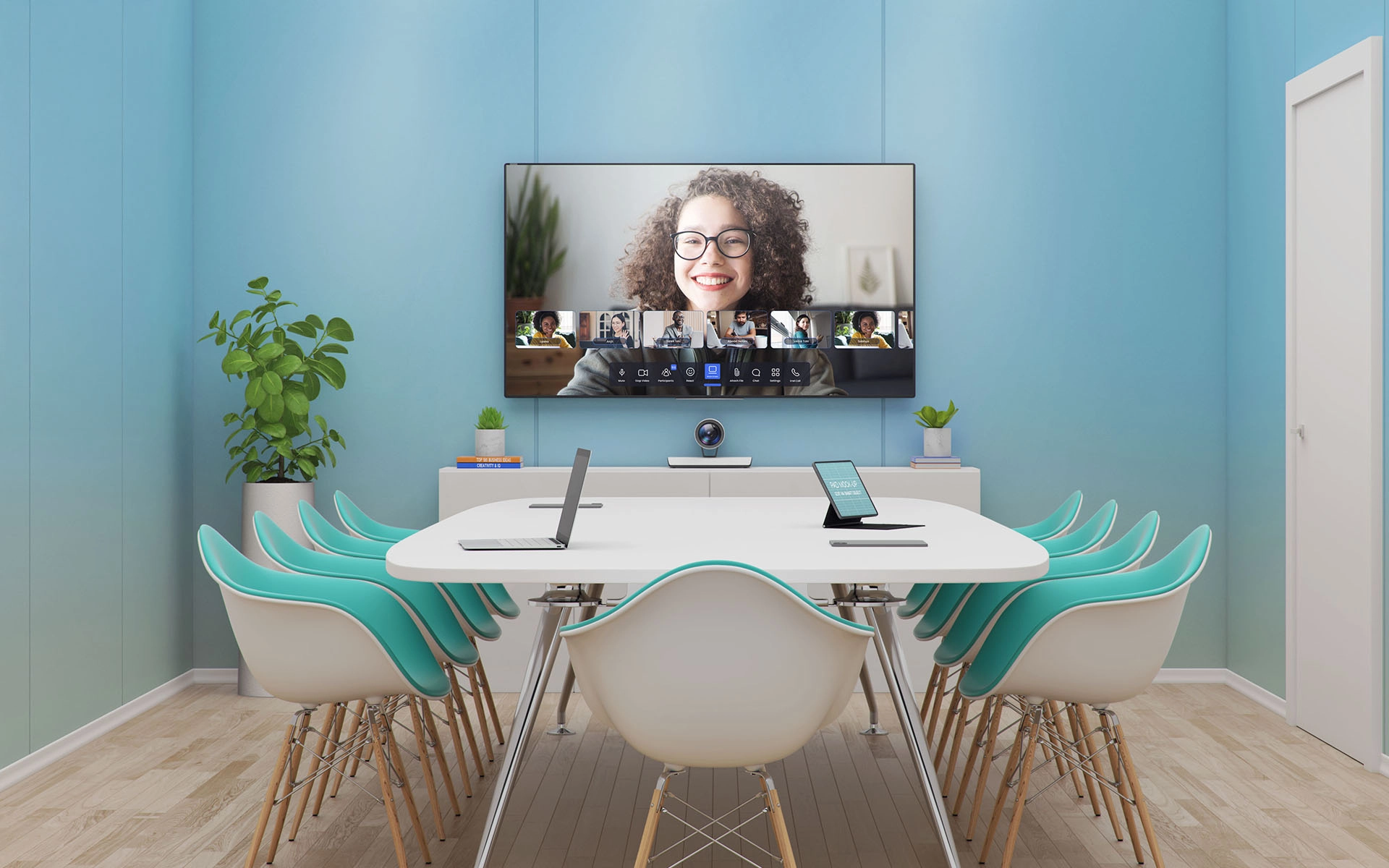
MetaConnect extends the ecosystem into communication. It allows people to join meeting rooms both virtually and physically — a hybrid model that lets a single gathering hold remote participants in immersive space and in-person attendees in the same room, connecting people, brands and events in real time.
Approach
We treated interface design as the difference between a world people visit once and a world they return to. Every interaction — entering a space, examining a product, completing a purchase, joining a room — was designed to lower friction and protect immersion. The UI had to stay quiet enough to keep people present, and clear enough to keep them confident.
Technically, we built for continuity across devices, so the experience holds together whether reached through a browser, a phone or an immersive headset. The blockchain layer was introduced where it earns its place: securing ownership and provenance for digital and hybrid assets, rather than as decoration. Throughout, real-time performance was treated as a feature in its own right, because a hybrid world only feels real when it responds without hesitation.
The Experience
What emerges is a place rather than a product. People do not log in to perform a task and leave; they arrive, wander, discover and gather. A user might explore an immersive retail space, find a physical product they want and have it delivered home, then step into a MetaConnect room to meet collaborators — some present virtually, some sitting together in the same physical location.
The ecosystem is built to support the things people actually want to do together online and off:
- Navigate immersive environments and discover digital and physical products in context
- Purchase virtually with real-world delivery, and own digital assets with verifiable, blockchain-backed records
- Join interactive spaces and meet through MetaConnect, both virtually and physically, in real time
Outcome and Impact
Dubai Metaverse stands as a forward-looking blueprint for what immersive platforms can become when engagement, commerce and human connection are designed as one system. It points toward digital cities, immersive retail, blockchain-enabled ownership and next-generation communication — not as separate ambitions, but as facets of a single coherent world.
The result is an environment where presence has consequence: where a visit can lead to a purchase, a purchase can arrive in the real world, and a meeting can bring people together across the boundary between virtual and physical. It is a bridge built to be lived on — and a statement of where immersive experience is heading next.
What we brought
01
02
03
04
05
06
07
Have a project like this?
One in-house team carried Dubai Metaverse from strategy to launch. Tell us what you're building and we'll send back a clear plan.
Next project
Dreamoro Book