

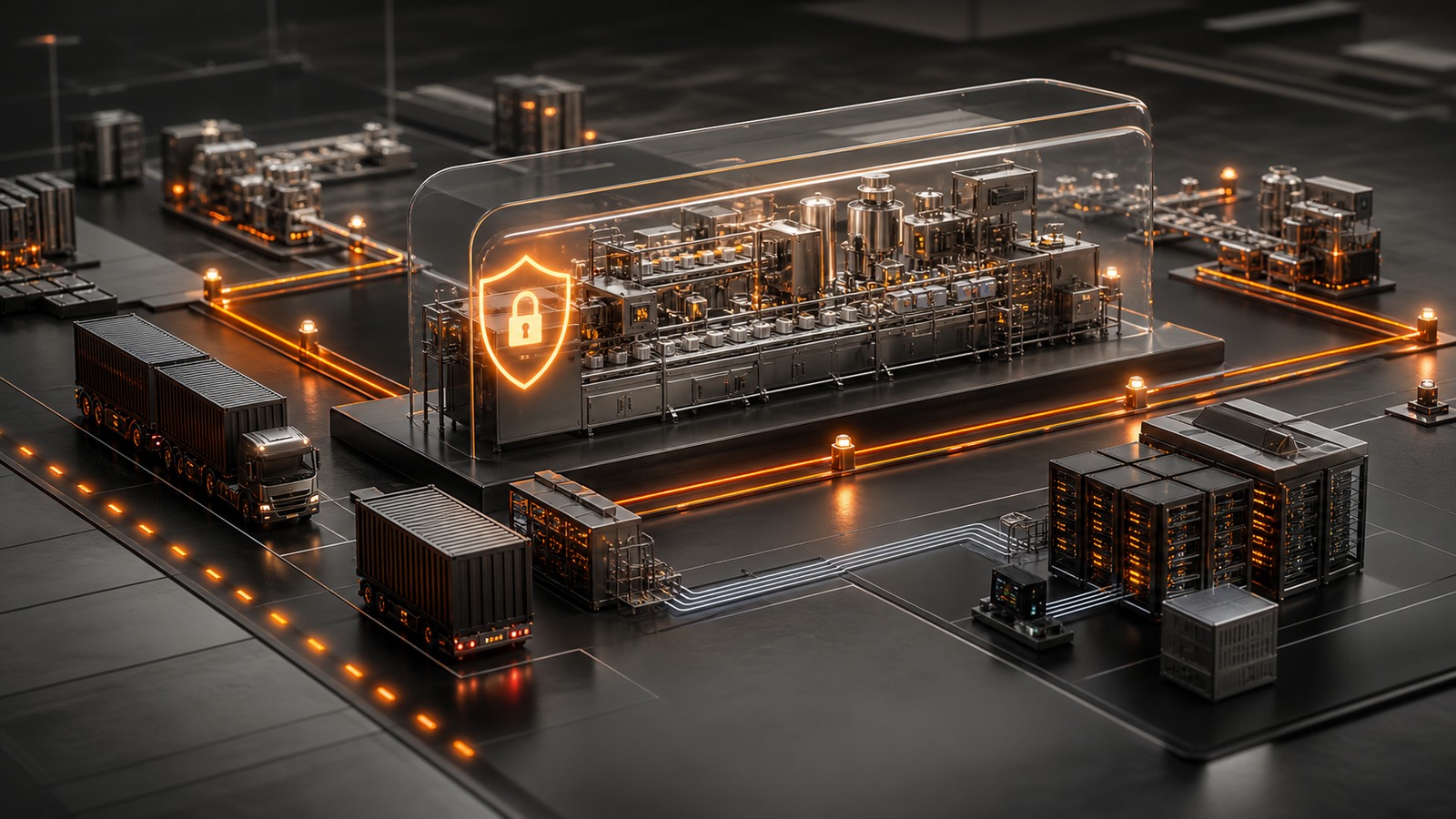
A ransomware attack that interrupts production is no longer only an IT event. It is a supply-chain, revenue, customer-trust, and executive-resilience event. Recent reporting says Coca-Cola's Fairlife dairy operation suspended production after a ransomware attack, while Coca-Cola's July 2026 SEC filing described a cybersecurity incident affecting Fairlife systems.
For growing companies, the lesson is bigger than one brand. Every organization that depends on websites, cloud systems, CRM, ecommerce, logistics, booking workflows, manufacturing systems, or data dashboards needs a clear digital-resilience plan. Cybersecurity is now part of how a business protects revenue continuity.
What Happened
TechCrunch reported that Fairlife paused parts of its operation after ransomware disrupted systems. Coca-Cola also disclosed that it identified unauthorized activity in a limited number of Fairlife's information technology systems, took steps to contain the incident, and was working with outside cybersecurity experts.
The exact operational impact will continue to evolve as the company completes its investigation. What is already clear is the pattern: modern operations are deeply connected. When attackers affect one digital layer, business interruption can reach physical production, customer service, logistics, finance, and reporting.
Why This Matters to Business Leaders
Many businesses still separate digital transformation from cybersecurity. That split is becoming dangerous. A company can modernize its website, automate sales, connect inventory, launch ecommerce, and migrate to cloud, but if recovery planning is weak, every new connection can become another point of exposure.
- Revenue depends on availability: If systems are down, orders, leads, invoices, and service delivery can slow immediately.
- Customer trust depends on response: Communication, containment, and recovery speed shape public confidence.
- Automation depends on controls: Connected workflows need permissions, monitoring, and fallback processes.
- Compliance depends on evidence: Leaders need logs, documented controls, and an incident timeline.
The Resilience Stack Every Company Should Review
1. Critical Workflow Mapping
Start by identifying the workflows that directly protect revenue: website forms, ecommerce checkout, CRM routing, accounting, inventory, production scheduling, customer portals, support inboxes, and analytics. If a workflow cannot stop without pain, it needs an owner and a recovery plan.
2. Backup and Restore Verification
Backups are only real when they are restorable. Companies should test recovery for databases, files, dashboards, website assets, integrations, and configuration settings. The test should confirm timing, ownership, and business priority.
3. Access Control and Segmentation
Modern businesses should separate admin accounts, production systems, development environments, and third-party access. A compromised user or vendor credential should not create unlimited movement across the business.
4. Incident Communication Workflows
When a disruption happens, teams need pre-approved communication paths. Who informs leadership? Who contacts vendors? Who updates customers? Who pauses ads or checkout flows? These questions should be answered before an incident.
5. Monitoring That Reaches Business Systems
Security monitoring should not stop at infrastructure. It should also watch form failures, payment errors, unusual CRM changes, admin logins, uptime, file changes, and data-transfer anomalies.
The Nexlla Take
Digital transformation should make a business faster, not more fragile. Nexlla helps companies design websites, business systems, integrations, cloud architecture, and automation with resilience built into the operating model.
The companies that recover fastest are not always the biggest. They are the ones that know what matters, know who owns it, and have practiced what to do when a digital dependency breaks.
Discussion
Join the conversation
Comments are moderated. We approve everything that's on-topic.
Leave a reply