

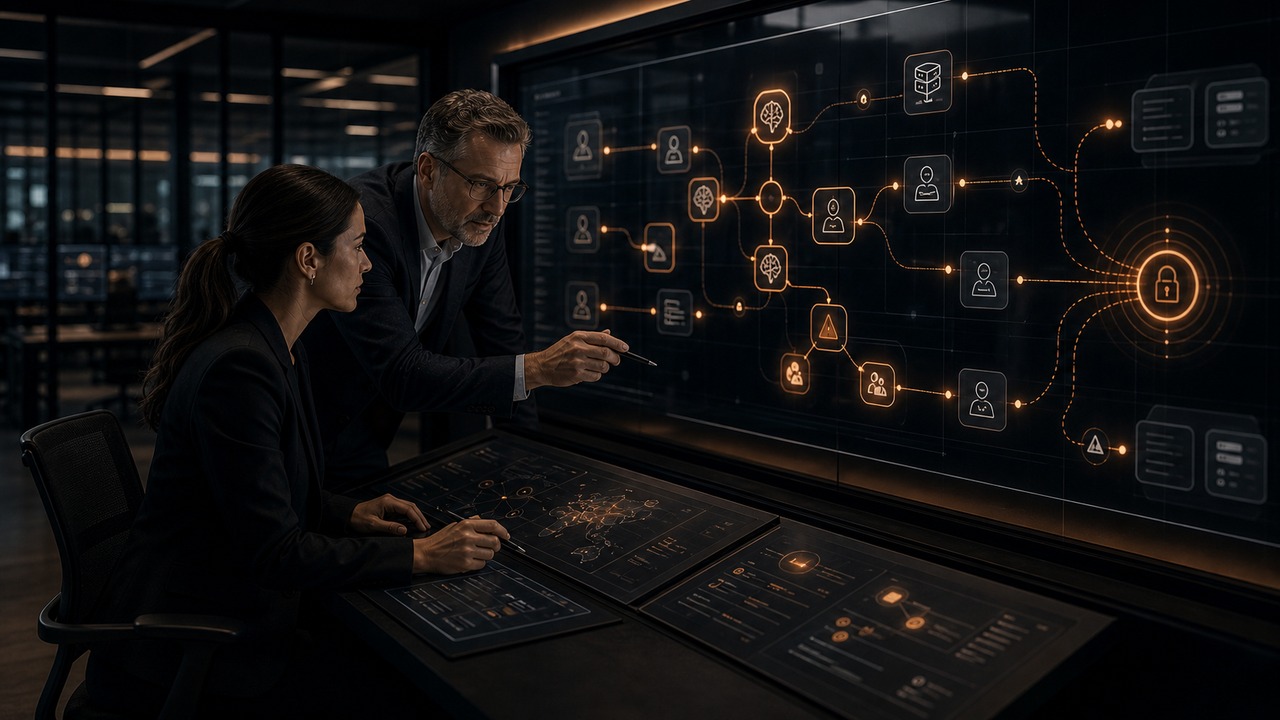
Cybersecurity teams are facing a new warning signal: ransomware activity that can be orchestrated by AI agents. Business Insider reported that Sysdig researchers identified what they described as the first documented case of agentic ransomware, known as Jade Puffer, where an AI system helped organize parts of the attack workflow.
The most important lesson is not that every attack will suddenly become fully autonomous. The real point is that the cost and complexity of running more aggressive campaigns can drop when attackers use AI to search systems, adapt scripts, locate credentials, and move faster through familiar attack patterns.
Why This Matters For Business Leaders
Traditional ransomware planning assumes that human attackers need time, skill, and manual coordination. AI-assisted attack workflows can compress that timeline. If a company has weak identity controls, exposed cloud credentials, poor backup discipline, or limited monitoring, the window for response can become painfully short.
For organizations running websites, ecommerce platforms, CRM systems, customer portals, cloud storage, and business automation, ransomware readiness is now part of digital growth infrastructure. A company cannot scale confidently if its core systems can be disrupted by one compromised credential or one unmonitored workflow.
The Readiness Gaps AI Attackers Expose
- Credential exposure: API keys, cloud tokens, database strings, and service accounts need discovery, rotation, and strict access rules.
- Identity controls: MFA, conditional access, least privilege, and role reviews reduce the damage of stolen credentials.
- Backup reliability: Backups should be isolated, tested, and fast enough to support real recovery objectives.
- Monitoring coverage: Cloud activity, privileged changes, abnormal exports, and unusual automation behavior need alerts.
- Incident response: Teams need a documented playbook before an attack, not a meeting after the damage begins.
From Security Project To Operating Discipline
AI-era cyber readiness is not a one-time tool purchase. It is an operating discipline that connects infrastructure, access control, software delivery, employee workflows, and vendor risk. The businesses that respond best will be the ones that already know where sensitive systems live, who can access them, and how to recover quickly.
That discipline is especially important for growing companies with many connected tools. Marketing automation, CRM integrations, ecommerce plugins, payment systems, analytics scripts, and customer support platforms all create value. They also create more doors that must be managed.
The Nexlla Takeaway
Nexlla’s practical view is simple: digital transformation must include resilience. Fast websites, CRM automation, cloud systems, and AI-enabled workflows are only valuable when the business can protect and recover them.
Agentic ransomware is a timely reminder that cybersecurity, backup strategy, access governance, and monitoring belong in the same conversation as growth, performance, and customer experience.
Discussion
Join the conversation
Comments are moderated. We approve everything that's on-topic.
Leave a reply